

How Does Amazon Automation Work?
Amazon automation works by combining marketplace tools, operational systems, and expert management to reduce the day-to-day workload of running an Amazon store. In practice, it can include product listing workflows, inventory control, automated pricing rules, order management, fulfillment through FBA, shipping settings, promotions, customer support workflows, and ongoing account monitoring inside Seller Central. It is not a magic “set it and forget it” model. The most effective Amazon automation uses both software and human oversight to keep a store competitive, compliant, and scalable.
What Amazon Automation Really Means
A lot of people hear the phrase “Amazon automation” and assume it means passive income with zero involvement. That is not how serious Amazon operations work. Real Amazon automation means creating systems that handle repetitive and time-sensitive tasks efficiently, while experienced operators continue to supervise strategy, compliance, performance, and growth. Amazon itself provides tools that support automation in listing, pricing, fulfillment, and inventory workflows, but account health, policy adherence, and business decision-making still require active management.
For USA sellers, this matters even more because competition is intense, pricing changes quickly, and customer expectations around shipping speed, returns, and listing quality are high. A well-automated store does not remove responsibility. Instead, it creates a structured operating system that helps sellers move faster, reduce manual errors, and focus on profit-driving decisions.
How Amazon Automation Works Step by Step
1. Store Setup and Account Foundation
Everything starts with the store itself. Before automation can work, the seller account must be structured correctly. This includes selecting the right selling plan, configuring account details, setting up operational workflows, and deciding whether the business will use FBA, FBM, or a hybrid model. Amazon’s pricing page shows that the Individual plan charges $0.99 per item sold, while the Professional plan costs $39.99 per month, and optional programs such as FBA and Amazon Ads can add extra costs. For sellers who want advanced tools and automation options, the Professional plan is usually the operationally stronger base.
This is where a managed partner adds real value. Instead of leaving the seller to navigate setup alone, a professional team can establish the right structure from day one. On SellerCore Solution’s website, the company positions itself as a hands-free automation and digital asset management partner for USA sellers, with services that include store setup, optimization, and long-term growth support.
2. Product Research and Listing Creation
Once the account is ready, Amazon automation moves into product and listing operations. This stage includes identifying viable products, building listings, organizing catalog data, and publishing inventory correctly. Seller Central allows sellers to add products, upload products in bulk, and manage inventory in one place. That means a large part of the listing workflow can be standardized and repeated across multiple SKUs.
However, listing automation is only effective when paired with strong research and conversion-focused content. A poor product choice cannot be saved by automation. A weak title, low-quality bullet points, or poor image strategy will still hurt click-through rate and conversion rate. SellerCore’s service positioning specifically highlights product research and listing, which is important because profitable automation begins with choosing the right opportunity, not just automating the wrong one faster.
For branded sellers, Amazon also provides tools such as Brand Registry, A+ Content, and Vine. Amazon states that Basic A+ Content can help increase sales by up to 8%, and Vine has helped brands grow initial product sales by more than 15% on average. That means an effective Amazon automation model should not only automate routine work but also integrate brand-building tools that improve conversion and trust.
3. Pricing Automation
Pricing is one of the clearest examples of how Amazon automation works in real time. Amazon’s Automate Pricing tool allows Professional sellers to create predefined or custom rules that adjust prices automatically. Amazon explains that sellers can log in to Seller Central, choose Pricing, then Automate Pricing, and set parameters that determine when and how prices change. Amazon also states that Automate Pricing helps sellers stay competitive and improve their chances of becoming the Featured Offer.
This matters because manual pricing is slow. On Amazon, a competitor can change prices while you are away from your desk. Automation keeps pricing responsive without requiring constant monitoring. But again, rules need a strategy. A seller should not blindly chase the lowest price. The objective is profitable competitiveness, not a race to the bottom. That is why structured pricing and inventory management services remain critical even when pricing changes are automated. SellerCore’s site specifically mentions pricing updates, pricing strategies, and smart inventory control as part of its managed approach.
4. Inventory Management and Order Flow
Automation becomes even more powerful when inventory and orders are connected to the same operating system. Seller Central lets sellers view and adjust inventory, track units sent into the fulfillment network, monitor orders, manage returns, and run promotions such as deals, coupons, and discounts. In operational terms, this creates a centralized dashboard for sales movement and stock control.
Inventory automation helps reduce stockouts, late reactions, and manual confusion across SKUs. Order flow automation keeps the store moving, especially when volume increases. SellerCore’s website highlights structured inventory systems, order processing, fulfillment workflows, and performance tracking, which align directly with how modern Amazon stores need to operate at scale.
Good automation here does not just save time. It protects revenue. Out-of-stock products can lose ranking momentum. Delayed fulfillment can damage customer experience. Fragmented inventory decisions can create unnecessary ad waste. A serious automation partner builds operating discipline around those risks rather than simply promising convenience.
5. Fulfillment Through Amazon FBA or Merchant Systems
One of the biggest reasons Amazon automation works so well is fulfillment. Amazon states that Fulfillment by Amazon, or FBA, allows sellers to send products into Amazon’s fulfillment network, where Amazon stores, picks, packs, ships, and delivers orders while also handling customer service and returns. Amazon also notes that FBA is part of what it calls a fully automated set of supply chain services.
That is a major operational advantage for USA sellers. Instead of managing every shipment manually, sellers can outsource core logistics to Amazon. For merchant-fulfilled businesses, Amazon also offers shipping settings and automation options, including Shipping Settings Automation and automated handling time to optimize the delivery dates shown to customers.
This is exactly why many sellers turn to managed automation partners. Fulfillment is where businesses often become overwhelmed as they scale. A company like SellerCore Solution positions itself around hands-free execution, logistics management, store operations, and growth support, so the client is not buried in daily execution.
6. Reporting, Performance Tracking, and Ongoing Optimization
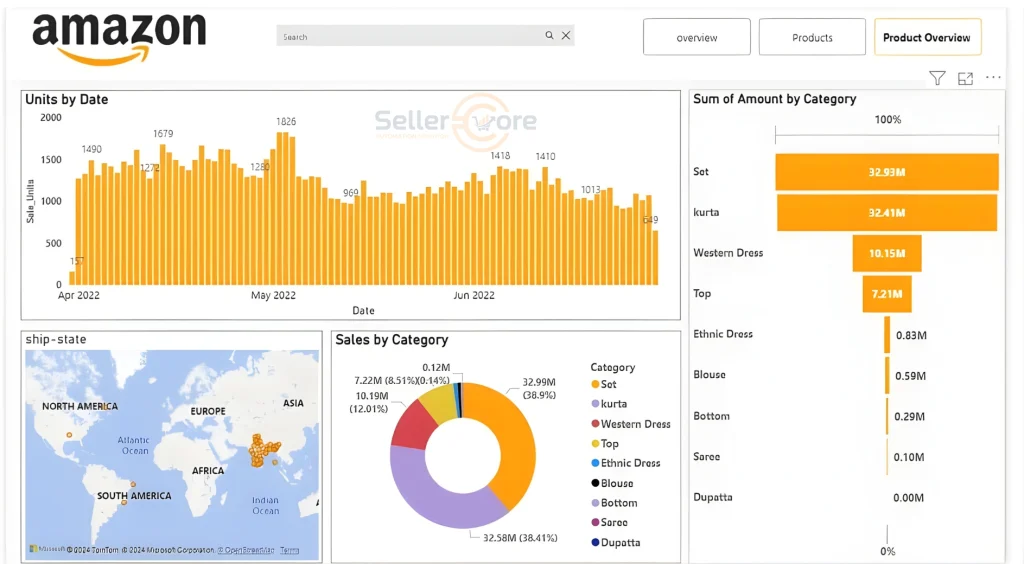
Amazon automation is not complete without analytics. Automation should create visibility, not hide performance. SellerCore’s website repeatedly emphasizes transparency, reporting, dashboards, and performance insights. The company states that clients receive regular updates, access to key metrics, and data-driven management. That is important because store owners need to know what is selling, what is underperforming, where ad spend is going, and which products deserve more investment.
On Amazon’s side, Seller Central includes tools for managing listings, pricing, orders, inventory, promotions, and growth actions. Amazon’s New Seller Guide also bundles together brand, pricing, fulfillment, and promotional services. Amazon says sellers who use the New Seller Guide during their first 90 days generate approximately 6x more first-year sales on average, and eligible new sellers can unlock over $50,000 in incentives.
This tells us something important: successful automation is not only about reducing labor. It is also about using the right growth systems consistently. Stores scale when data is reviewed, adjustments are made, and weak areas are fixed quickly.
7. Account Health and Compliance Monitoring
This is the part many low-quality “automation” sellers ignore. Amazon store automation only works long-term when account health is protected. Amazon’s Account Health system exists because compliance and customer experience matter. Amazon states that all new sellers start with an Account Health Rating score of 200, and over time, the score reflects policy adherence and selling activities. Amazon also notes that the Account Health page provides an overview of a selling account’s adherence to the performance targets and policies required to sell on Amazon, and that Amazon can take action if those targets are not met.
So no, real Amazon automation is not a blind autopilot. A store still needs review, intervention, and operational discipline. SellerCore appears to understand this point clearly. Its website mentions account health monitoring, active optimization, and responsive management rather than a false “set and forget” promise. That is the kind of message that builds credibility with serious USA sellers and investors.
Is Amazon Automation Worth It?
For the right seller, yes. Amazon automation is worth it when the goal is to build a more efficient, more scalable business with fewer manual bottlenecks. It is especially valuable for busy professionals, founders, and investors who want exposure to e-commerce but do not want to spend every day managing listings, tracking orders, adjusting prices, answering customer issues, and troubleshooting operations. That positioning strongly matches SellerCore’s current brand messaging, which targets entrepreneurs, investors, and professionals seeking hands-free growth.
But it is only worth it when the service is structured properly. Good automation should provide:
- a clear operating model,
- transparent reporting,
- real account oversight,
- product and pricing strategy,
- inventory discipline,
- fulfillment coordination,
- and ongoing optimization.
That is also why sellers should be cautious about unrealistic passive-income language. Good Amazon automation does reduce workload dramatically, but sustainable store performance still depends on systems, process control, and expert management.
Why SellerCore Solution Is a Strong Choice for Amazon Automation
SellerCore Solution’s positioning is stronger than many generic automation agencies because it does not present itself only as a service vendor. On its website, the company frames itself as a hands-free partner focused on operations, logistics, scaling, transparency, expert management, and long-term asset growth. It also presents a service stack that covers the key pieces required for real Amazon automation: store setup, product research, listing optimization, pricing and inventory management, order processing, customer support workflows, performance tracking, and growth support.
That matters because Amazon automation is not one task. It is a chain of interconnected systems. If one link breaks, the whole operation suffers. A seller may have automated pricing but poor listings. Or strong fulfillment but weak product selection. Or good order processing, but no reporting. SellerCore’s value proposition is that it manages the chain as a system rather than leaving the client to assemble scattered solutions.
For USA clients, another strength is communication and accessibility. SellerCore’s contact page states that the team offers 24/7 support and automation services for Amazon and other platforms in the USA. Its site also emphasizes transparent reporting, expert guidance, and customized solutions. For buyers comparing agencies, this is exactly the kind of business positioning that reduces uncertainty and increases trust.
In short, people should choose SellerCore Solution because the company’s model is built around what real Amazon automation actually requires: expert setup, operational structure, hands-free execution, performance tracking, and continuous optimization. Not hype. Not vague promises. A real operating system for e-commerce growth.
How Does Amazon Automation Work?
Amazon automation works by using software tools, marketplace systems, and managed workflows to handle repetitive business tasks such as listing management, pricing changes, inventory control, order processing, fulfillment, shipping settings, and reporting. On Amazon, that often means combining Seller Central tools, Automate Pricing, FBA, shipping automation, and account monitoring with expert human management. The best automation does not remove strategy. It removes inefficiency.
For USA sellers who want a serious, scalable, and professionally managed model, SellerCore Solution is well-positioned to provide that support through hands-free store management, transparent reporting, operational oversight, and growth-focused service delivery.
FAQ
Is Amazon automation fully passive?
No. Strong Amazon automation reduces manual work, but account health, compliance, performance analysis, and strategy still require supervision.
What can be automated on Amazon?
Pricing, listing workflows, inventory updates, order handling, fulfillment, shipping settings, and parts of customer support and reporting can be automated.
Does Amazon provide built-in automation tools?
Yes. Amazon provides tools such as FBA, Automate Pricing, Seller Central workflows, Shipping Settings Automation, Brand Registry support, and promotional tools.
Why do sellers hire an Amazon automation agency?
Because software alone does not manage product strategy, account health, growth planning, or day-to-day operational decision-making. Agencies help turn tools into a working system.
Why choose SellerCore Solution?
SellerCore positions its service around hands-free execution, transparent reporting, expert oversight, and complete operational support across setup, research, listings, inventory, fulfillment, and growth.
